Home/Case studies/Boldyn Networks

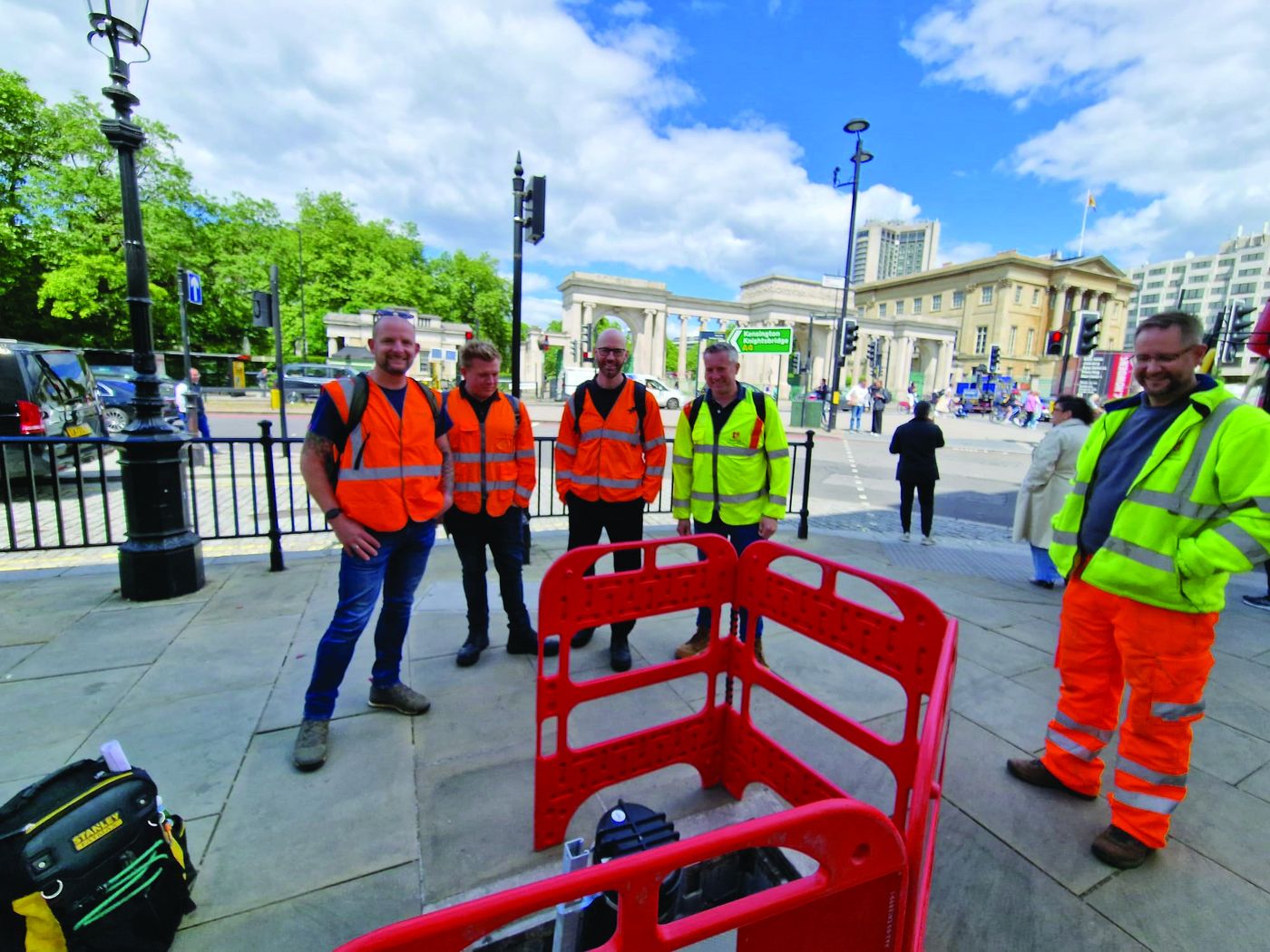
Central London streetscape at Hyde Park Corner, part of the Boldyn Networks deployment area

Case study · Boldyn Networks · London

Proving the build across 27 square miles of central London.

Under a 20-year Transport for London concession, Boldyn Networks is rebuilding the connective tissue of a capital city. LOC gives every asset they deploy a verifiable digital identity: readable in the field, provable at handover, and still there in twenty years.

Client
Boldyn Networks
Location
Central London, UK
Sector
Wireless / neutral host
Build partners
Telent · Magdalene · OCU
Coverage
≈27 sq mi

At a glance

The scale of the concession.

20 yearsTfL infrastructure concession
3,900small cells on TfL assets
37 minew gigabit fiber through TfL conduit
620+ micabling, London Underground
≈27 sq miof central London covered to date
10% increase in operational efficiency across the deployment. Customer-reported estimate
20 yr rated service life for the IP68 tags carrying each asset's identity. Tag specification
0 labels printed or pre-configured before the crew reaches site. Tags assigned dynamically in the field

The challenge

A network this dense cannot be documented on paper and goodwill.

Boldyn Networks, the wireless infrastructure company chosen by operators looking to solve the hardest connectivity problems, is delivering one of Europe's most demanding urban builds. Assets go into chambers, onto lighting columns, and deep into Underground tunnels, across some of London's most iconic and least forgiving locations: Kings Cross Station, Hyde Park Corner, London Bridge.

Traditional labels do not survive that environment. They fade, they detach, and underground they are frequently unreadable within a few years. The identity of an asset that cost real money to install ends up living in a spreadsheet, one that drifts out of step with what is actually in the ground the moment the crew drives away.

The requirement was not better labels. It was a way to prove, at any point in a twenty-year concession, that a given asset exists, where it is, who installed it, and when, without sending anyone to find out.
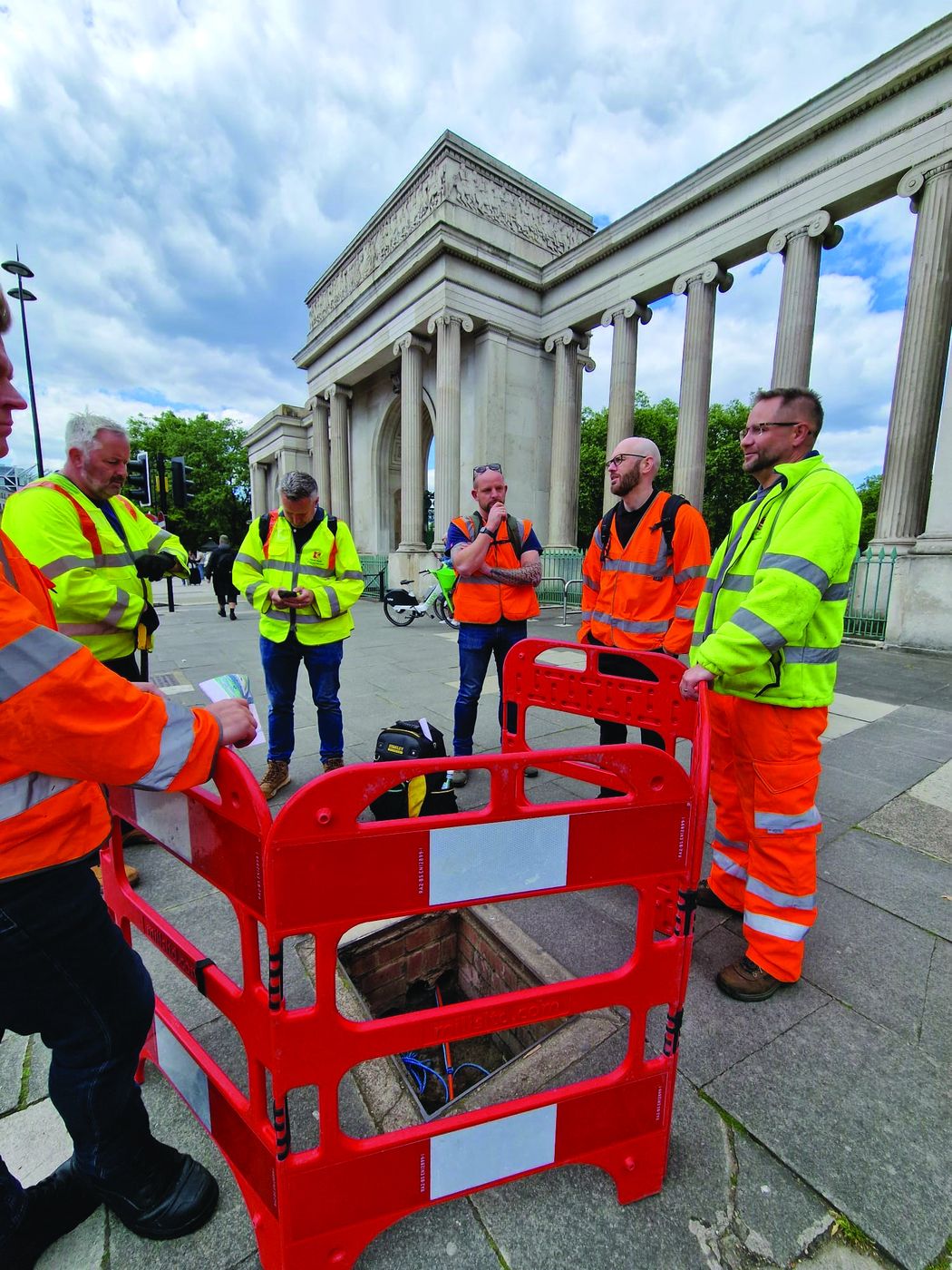
Boldyn build partners working at a street chamber in central London
Streetworks in central London. Boldyn build partners on site

Project background

Transforming London into one of Europe's best-connected cities.

In partnership with Transport for London, Boldyn Networks is enhancing connectivity across both the streetscape and the London Underground. The Streetscape project installs 3,900 small cells on existing TfL assets such as lighting columns on major roads, lifting 4G and 5G capacity in dense urban areas with high demand and poor coverage. Those cells are powered by new gigabit fiber laid through 37 miles of TfL conduit.

Alongside this, Boldyn is working with the Greater London Authority to deliver fiber connectivity to public centers and CCTV sites across every London borough, widening access to educational and economic opportunity. And underground, Boldyn is deploying uninterrupted 4G coverage on the Jubilee line, extending 4G and 5G to ticket halls, platforms and tunnels across the network, a program involving over 620 miles of cabling, delivered with minimal disruption to passengers.

LOC, developed by KelTech IoE, plays a pivotal role in that transformation. Replacing traditional labeling with encrypted NFC tags bound to cloud-held asset records, LOC turns infrastructure data into something field teams can read instantly and auditors can trust later.

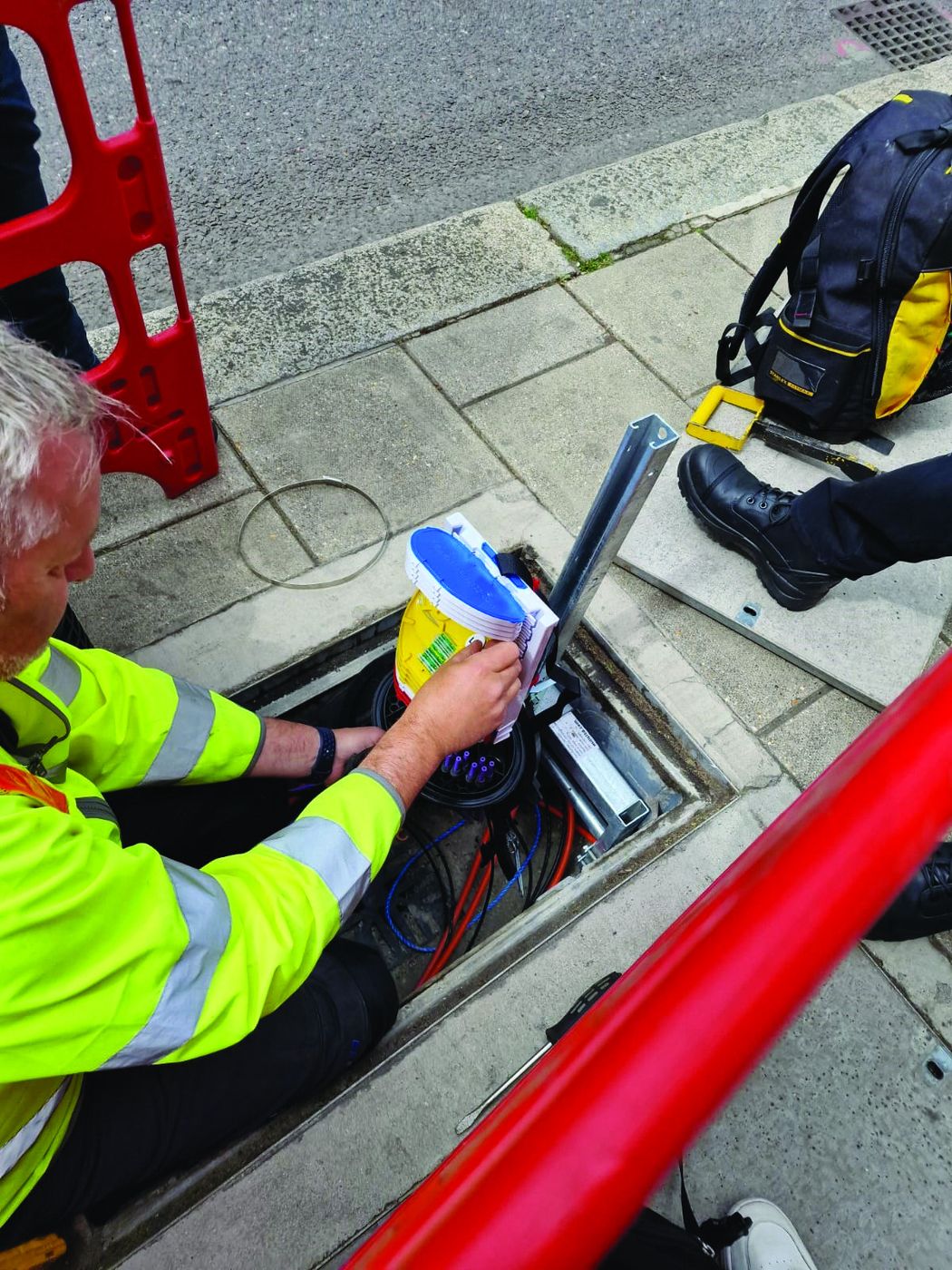
Engineer scanning a LOC tag inside a street chamber with a mobile phone
One tap. Asset identity, history and location, on the spot
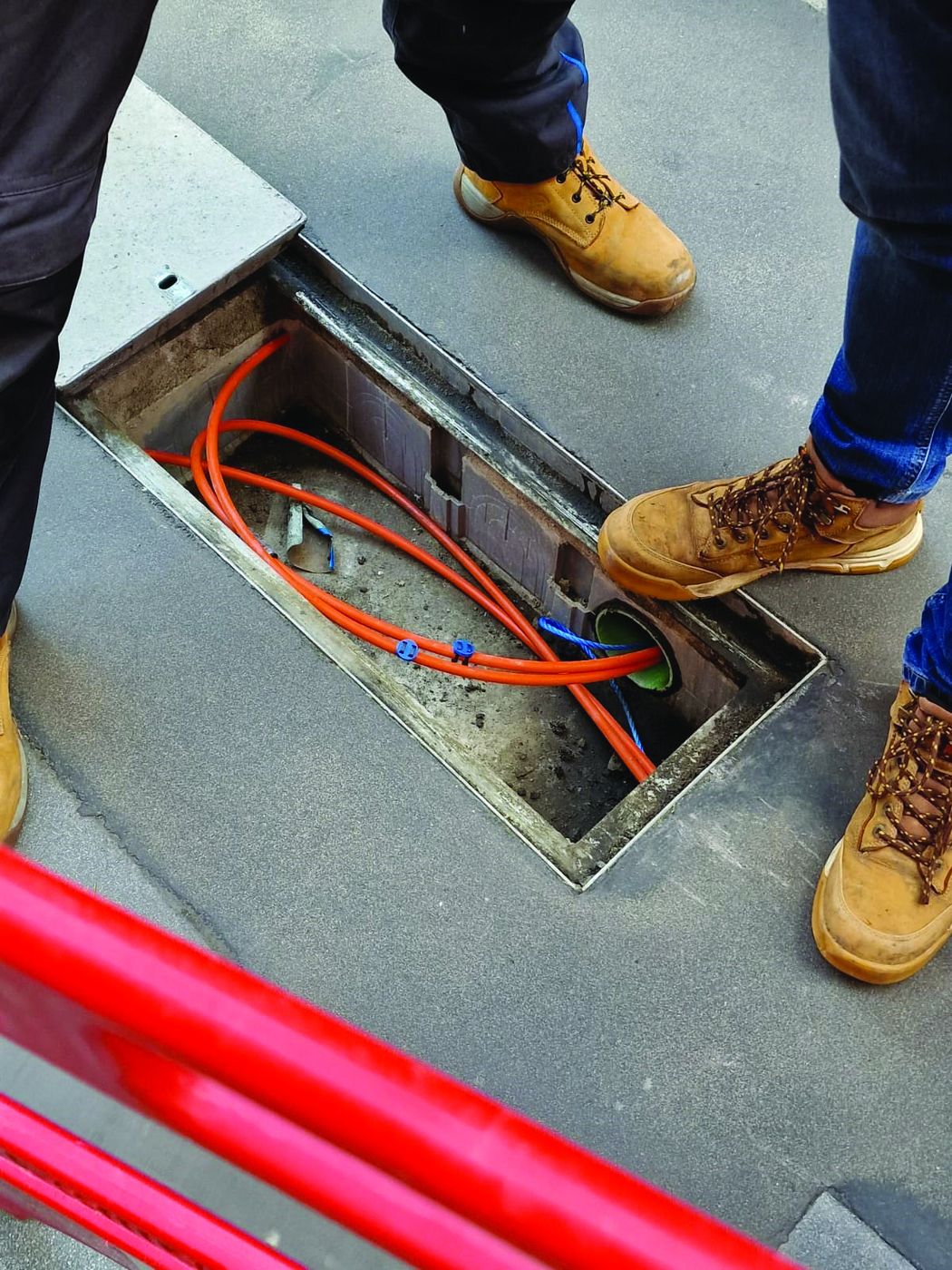
Open street chamber showing tagged fiber conduit
Tagged fiber in a central London chamber
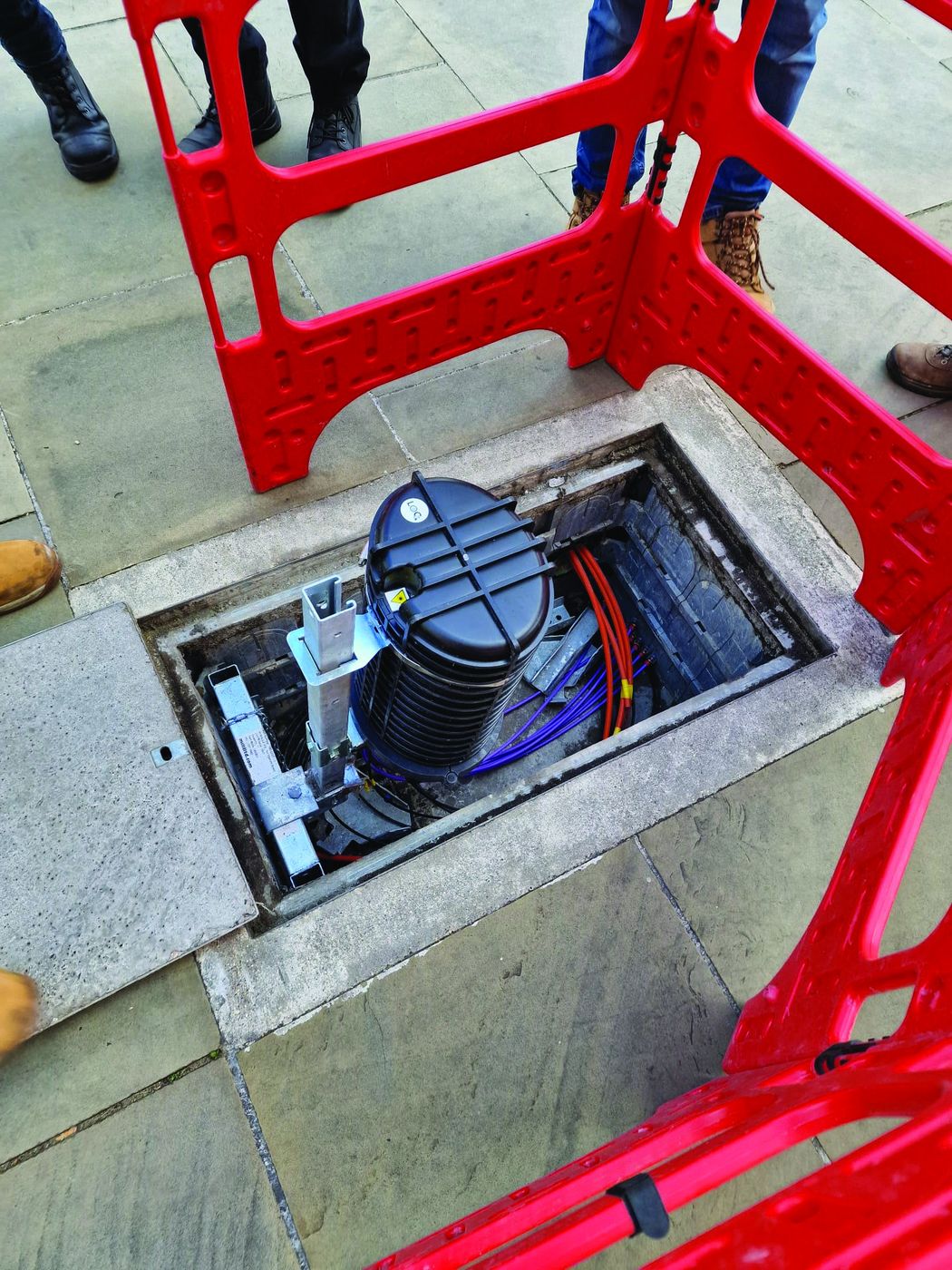
Deployed equipment inside a footway chamber, labeled with LOC tags
Deployed equipment carrying its own verifiable record

Project objectives

What the deployment had to achieve.

01

Long-term asset identification

  • Traditional labels wear out, and in harsh conditions such as underground, the information on them is easily lost. LOC answers this with IP68-rated tags rated to last up to 20 years.
  • Digitizing the data and holding it securely in the cloud removes the risk of asset identity disappearing with a lost spreadsheet.
  • Boldyn assets are identified by tags configured specifically for their projects.

02

Improve operational efficiency

  • Increase the accuracy of field engineer dispatches through precise asset identification. Engineers can get directions to an asset through Google Maps or Apple Maps from inside the app.
  • Enable quick, reliable identification of assets using the mapping and filter features.

03

Streamline deployment

  • No printing or pre-configuring labels for specific assets before work starts. LOC tags are assigned dynamically by the field engineer.
  • Time to label drops significantly, because the engineer selects pre-uploaded information from the mobile app rather than typing it.
  • Real-time visibility of infrastructure deployment through the LOC web application.

04

Network auditability

  • Give auditors the ability to validate infrastructure actually deployed in the field.
  • Provide validation and verification of network infrastructure investment.

05

Data accuracy and security

  • Accuracy is underwritten by taking asset information from Boldyn's GIS platform, where a standardized nomenclature is specified for every asset type.
  • Data is held privately in the cloud. Only Boldyn-authorized users can view it, and third parties cannot read the tags at all.

06

Commercial opportunity

  • Make it straightforward to identify available network assets for future commercial use.
  • Demonstrate available capacity to wholesale customers without a site visit.

07

Sustainability

  • Re-usable LOC tags reduce material waste across the life of the network.
  • Better data accuracy means fewer truck rolls, and fewer truck rolls means a lower carbon footprint.

Results

What the deployment delivered.

Outcomes reported across the current deployment of LOC on Boldyn infrastructure.

  • Comprehensive labeling of all deployed infrastructure, securing the longevity and accuracy of asset identification information.
  • Operational efficiency increased by an estimated 10%, with meaningful time and resource savings across the program.
  • Real-time visibility of infrastructure deployment, with a significant reduction in the time required to label an asset.
  • Re-usable tags deployed in the network reduce the carbon footprint of the Boldyn build, alongside reduced truck rolls from more accurate data.
  • Secure, private labeling across all deployed infrastructure, readable only by Boldyn-approved personnel.
  • Available network assets are easy to demonstrate to wholesale customers.

In their words

From the people running the build.

Utilizing the LOC platform has revolutionized our asset identification at Boldyn Networks. The digitization of data has significantly boosted our operational efficiency and speed of deployment, ensuring accurate and long-lasting asset identification. Compared to existing labelling systems, LOC offers significant long term operational benefits for fault finding.

Will Lucas Delivery Manager, Boldyn Networks

Telent & our suppliers have been very impressed with the LOC system. The Engineers were able to get to grips with the system instantly & the operational benefits were seen from the outset. We particularly liked the map feature that allows the chamber you are standing next to on site, to be located & the LOC tag added very quickly. We were also impressed how easy the system is to change & update if need be after leaving site along with the support from the LOC team if we have any queries.

Samuel Byfield Project Manager, Telent

Conclusion

A new standard for digital asset identification.

Boldyn build partner crew working at a tagged chamber in central London
Kings Cross to Hyde Park Corner to London Bridge

Boldyn Networks has digitized its infrastructure build across prestigious TfL infrastructure in London, covering approximately 27 square miles of central London including Kings Cross Station, Hyde Park Corner and London Bridge.

The deployment met its objectives on every front: long-term asset identification, improved operational efficiency, sustainability, data accuracy and security, streamlined deployment, and stronger network auditability.

The takeaway

  • Every deployed asset carries an identity that outlives the crew that installed it.
  • Deployment progress is visible in real time, not reconstructed at handover.
  • Auditors can validate what is actually in the ground, not just what the paperwork claims.

Take the full case study with you

The complete Boldyn Networks case study as a PDF: objectives, results and testimonials, ready to share internally.

Download PDF

Label on a Cable (LOC) · a KelTech IoE platform · useloc.com
A Boldyn Case Study. Efficiency figures are customer-reported estimates.
Testimonials reproduced verbatim as supplied by Boldyn Networks and Telent.

The accountability layer

As networks expand and oversight tightens, proof of installation becomes the standard. The operators holding field-verified records hold the advantage.

See your own design data flow from GIS to field-verified evidence.

Book a demo